
"Central American coffee history"
800 article(s) found

Costa Rican coffee flavor Central and South American coffee characteristics Tara Pearl Diamond Villa washing SHB card
Costa Rican coffee plants were imported from Cuba in 1779 and exported for the first time in 1820. There are now about 32000 coffee farmers, with an average of less than 10000 yuan per farmer. Costa Rica has a population of 410 million (2006), an active coffee planting area of 82500 square meters, an annual output of 1.7 million bags (60kgs per bag), and an annual consumption of 38 million bags in China.

To understand the spread history of coffee | when did coffee enter China?
Professional coffee knowledge exchange more coffee bean information Please follow coffee workshop (Wechat official account cafe_style) Coffee the first stop is Ethiopia in Africa, the second stop is Yemen, the third stop is India, the fourth stop is Java, the fifth stop is France, the sixth stop of coffee is the North American continent, the North American continent has brought a magical turning point for coffee. Coffee from Essex Harar to Mocha, Yemen

The origin and development history and culture of fine coffee beans
In many countries coffee production is severely affected for political reasons. The coffee industry in Nicaragua is no exception. The revolution of 1979 forced coffee growers to flee to Miami. A period of uncertainty ensued as the government considered whether to reallocate land (including many plantations), resulting in coffee shortages and declining yields from the early 1970s.

Costa Rica Finca La Guaca Precious Manor introduction Costa Rican Coffee introduction
Professional coffee knowledge exchange more coffee bean information Please follow the coffee workshop (Wechat official account cafe_style) Costa Rican coffee has a history of more than 200 years. It is not only an important basis for the country's economy and people's livelihood, but also an indispensable role in the global coffee history. In the past decade, it has become popular all over the world as a micro-processing plant, in this small Central American country.

Common sense of Coffee Culture Coffee History of Southern Asia and Oceania
[India (India)] more than 80% of India's coffee is grown in the southern province of Karnataka, which is often sold under the old name "Mysore". The best Myso beans are thought to be Sumatra drunk by the poor and taste as rich and sweet as secondary Sumatra, but at a lower price. Another kind of "rainy season" (Monsooned Mala)

A brief History of Coffee Bean cultivation in Honduras present situation and Qi of coffee quality caffeine export in Honduras
Honduras faces the Caribbean Sea to the north and the Pacific Ocean to the south. It is a Central American country with a population of about 9.1 million. It has a total area of about 43400 square miles and consists mainly of mountains, coastal plains, undeveloped jungles in the northeast and the densely populated Sura River Valley in the northwest. Generally speaking, the climate is milder in the mountains and more tropical in the lowlands. In such a growing environment

A brief introduction to the History and Culture of the Origin and Development of Costa Rican Yelsa Rocadura Fine Coffee Bean
Costa Rica is the country where coffee was first introduced into Central America and has a long history. The coffee organization has a complete system from production to marketing. Because it is located in the Central American Gorge, there are many volcanoes, it has the natural advantages of sunshine and land, and the climate is reconciled by Pacific and Atlantic currents and sea breeze at the same time, the coffee produced has the characteristics of local micro-climate, in terms of quality and quantity.

Central American boutique coffee pioneer-historical materials of Eincht Manor in Panama Red Kaduai
For the exchange of professional baristas, please follow the coffee workshop (Wechat official account cafe_style) Eincht Manor History introduction Eincht Manor has always been a pioneer of fine coffee in Central America. About 50 years ago, it was one of the first estates to focus on a single variety and vertically integrated production of high-quality coffee. These efforts have been given back to Eincht Manor (and Macadamia Manor)
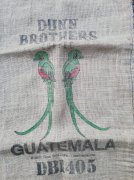
History of Origin of Coffee beans in Guatemala, 10th Coffee producer in the World COE bidding Information for Guatemala
Guatemalan Coffee: know the origin of your coffee Guatemala is a relatively small country, but it is extremely diverse in all respects. It has one of the most diverse climates in the world, with 21 Mayan dialects and growing coffee with a variety of flavor characteristics. Although this Central American country has experienced political upheaval and economic destruction from foreign governments,

History, culture, stories and allusions of high-quality coffee products from Nicaragua
For the exchange of professional baristas, please pay attention to the coffee workshop (Wechat official account cafe_style) the history, culture, stories and allusions of Nicaraguan God-given coffee single beans, Nicaraguan coffee has been forgotten in Taiwan in recent years, and Nicaraguan coffee is rarely seen. In fact, the growing conditions in Nicaragua are not inferior to those in Central American countries, and the coffee produced is characterized by freshness and balance.

Introduction to the History of Coffee in Martinique, the birthplace of Coffee in Central America
Professional baristas follow the coffee workshop (Wechat official account cafe_style) Martinique is a small island and the birthplace of coffee in Central America, but it produces very little coffee today. The first coffee tree in the Western Hemisphere was brought from France by Gabriel Mathieu de Clieu in the early 1820s. Good morning, Dirkley.

A brief History of Coffee in Honduras: an introduction to altitude grading system and Coffee characteristics
For the exchange of professional baristas, please pay attention to the coffee workshop (Wechat official account cafe_style). For mild-tempered Central American coffee, Honduras is one of them with distinctive style and rich tonality. Although the coffee industry develops relatively late, it is powerful, with not only high output, high sweetness, but also fruity and low acidity, but also feeds a number of loyal followers. It's like Norwegian coffee.

Aromatic Mercedes Estate Coffee Bean Origin History Culture Introduction
In El Salvador, Cusca Bappa produces the finest coffee beans, which are slightly lighter in weight, aromatic, pure and slightly acidic. Like Guatemala and Costa Rica, coffee in El Salvador is graded according to altitude, with the higher the altitude, the better the coffee. The best brand is Pip, whose quality has been recognized by the American Organic Certification Society. other

A brief introduction to the Origin, Development, History and Culture of Fine Coffee beans in Tian Chi Manor
Columbus arrived here in 1502 and reached the east coast of Nicaragua. In 1522, Spanish colonists began to conquer the region. The cities of Granada and Leon were founded in 1524. From then on, Nicaragua became a Spanish colony and came under the jurisdiction of the Governor's Office of Guatemala. The city of Leon developed into a political and cultural center; Granada became a commercial and agricultural center. In the later period of colonial rule

A brief introduction to the Origin, Development, History and Culture of Fine Coffee beans in Tian Chi Manor with moderate acidity
In many countries, coffee production will be seriously affected for political reasons. Nicaraguan coffee industry is no exception. The 1979 revolution forced coffee planters to flee to Miami. A period of indecision followed, when the government considered whether to redistribute land (including many plantations), which led to a shortage of coffee and a decline in production since the early 1970s

A brief introduction to the history and culture of the origin and development of fine coffee beans in Mercedes Manor
In El Salvador, the coffee beans rich in the Kuskabapa region are the best, slightly lighter, fragrant, pure and slightly sour. Like Guatemala and Costa Rica, coffee in El Salvador is graded according to altitude, and the higher the altitude, the better the coffee. The best brand is Pip, whose quality has been recognized by the American Organic Certification Society. In addition
The history of coffee. How much do you know about the history of coffee?
When we enjoy coffee, most of the time we just think of it as a drink, a different, unique, refreshing drink, but seldom think about it: what's the big thing about a small coffee? Just because coffee is astonishingly famous, it is the second largest export product in the world after oil. Since it was recognized and first eaten by human beings, it has been used for the first time.

A brief introduction to the History and Culture of the Origin and Development of Fine Coffee beans in Tianqi Manor with moderate Particle size
In many countries, coffee production will be seriously affected for political reasons. Nicaraguan coffee industry is no exception. The 1979 revolution forced coffee planters to flee to Miami. A period of indecision followed, when the government considered whether to redistribute land (including many plantations), which led to a shortage of coffee and a decline in production since the early 1970s

Mercedes Estate Coffee Bean Origin History Culture Introduction
El Salvador is tied with Mexico and Guatemala as the producer of Asa and Meldo, and is competing with other countries for the top one or two places in Central America. Highland origin, for the size of large coffee beans, fragrant taste mild. As in Guatemala and Costa Rica, coffee in El Salvador is graded according to altitude, with the higher the altitude, the better the coffee.

[introduction of Coffee Origin] A brief history of the development of high-quality coffee in Costa Rica
Professional coffee knowledge exchange more coffee bean information Please follow the coffee workshop (Wechat official account cafe_style) in the domestic individual coffee consumption market, coffee from Costa Rica has been very popular with guests. The editor once thought carefully why she could break out from other individual coffee and become one of the famous representatives of Central American coffee: coffee with rich flavor and excellent quality.